











The Prodigal Daughter
Charleston had a peculiar relationship with its daughters. It raised them to be gracious, taught them to be formidable, and then spent the better part of their adult lives discussing whether they had turned out properly. A woman’s reputation could survive a questionable marriage, an unfortunate investment and, depending on the family, a discreet affair. Heaven help the girl who served store-bought cheese straws at Christmas.
Calista Beauregard DeVere had long since given the city enough material to reach its own conclusions.
By the time her train pulled in a week after Thanksgiving, three versions of her homecoming were circulating south of Broad. The first held that she had been run out of Palm Beach after a charity ball and an incident involving an unusually large number of corsages. The second had her returning to announce an engagement, though nobody could agree on the gentleman’s name, occupation or marital status. The third, which Calista found particularly insulting, suggested she had run out of money.
Calista had occasionally run out of patience, suitors and suitable dinner companions. The family accounts remained in excellent health.

She arrived at The Charleston Place in a dark tweed jacket and matching cropped trousers, with a black turtleneck underneath, trailed by six suitcases, two hatboxes and a porter who had already begun reconsidering his profession. The lobby smelled of fir and furniture polish. Someone had wound magnolia leaves through the banisters. Calista stopped to adjust one before proceeding to the desk.
“Careful with that one,” she told the porter. “There’s French silk in there.”
“And the small case, ma’am?”
“Family secrets. Those are considerably heavier.”
He put it on top of the luggage and asked for her room number.

Her mother, Eleanor Beauregard DeVere, had once presided over Charleston’s Christmas calendar with the authority usually reserved for heads of state and women who chaired hospital boards. Invitations to the DeVere Christmas Eve Ball were engraved, the guest lists scrutinized, and whole families spent December wondering whether they had done something to offend her. Eleanor had offended nearly everyone at one time or another. She simply had the good sense to do it beautifully.
The ball had stopped when Eleanor died. Whenever someone suggested bringing it back, Calista complained about the caterer or the expense of flowers, though expense had never previously troubled her and the caterer had offered to come out of retirement. Eventually people stopped asking. She could get through a conversation about her mother if everyone remained reasonably composed; she could not imagine getting through an evening of watching people dance in a room where Eleanor ought to have been.
Palm Beach had suited her. Nobody there knew when her mother’s birthday was or understood why she disliked gardenias in the house, and a woman could refuse a Christmas invitation without the hostess asking whether she was managing. Calista had made herself thoroughly unwelcome in several circles for entirely unrelated reasons. She preferred that.
Now, from a corner suite overlooking the rooftops, she telephoned her father to announce that she intended to revive the ball.
“Your mother started planning in September,” said Judson Beauregard DeVere III, who had never once in his life been accused of optimism.
“Mother also insisted on making her own cranberry sauce. We all have our limitations.”
“Have you spoken to the hotel?”
“I’m staying in it, Daddy.”
“That’s not quite the same thing.”
Calista considered this a technicality. By the end of the afternoon, however, she had secured a room for forty-eight guests and agreed to more restrictions than she intended to mention to her father. The hotel manager had a pencil, a calendar and no apparent interest in the length of time the DeVeres had been entertaining in Charleston. Heads on beds was all that mattered.
She drew up a guest list. Several old families had become less established after unfortunate decisions involving cotton futures. Others had acquired new money and were behaving as though they had invented it. Then there were the second wives. Calista had nothing against second wives in principle. She simply believed there ought to be a decent waiting period before they began chairing the charities the first ones had built.
She wrote forty-eight names. She liked eleven, tolerated six, and considered the remaining thirty-one a necessary expense of maintaining one’s social standing.
She had changed out of the tweed and into her plum cable-knit dress before her father sent up Eleanor’s trunk from the house on Legare Street. Calista opened it looking for the old invitations, which would save her explaining the family crest to the engraver. It smelled of cedar and her mother’s perfume. She left the lid open and went to the window for a moment before coming back.
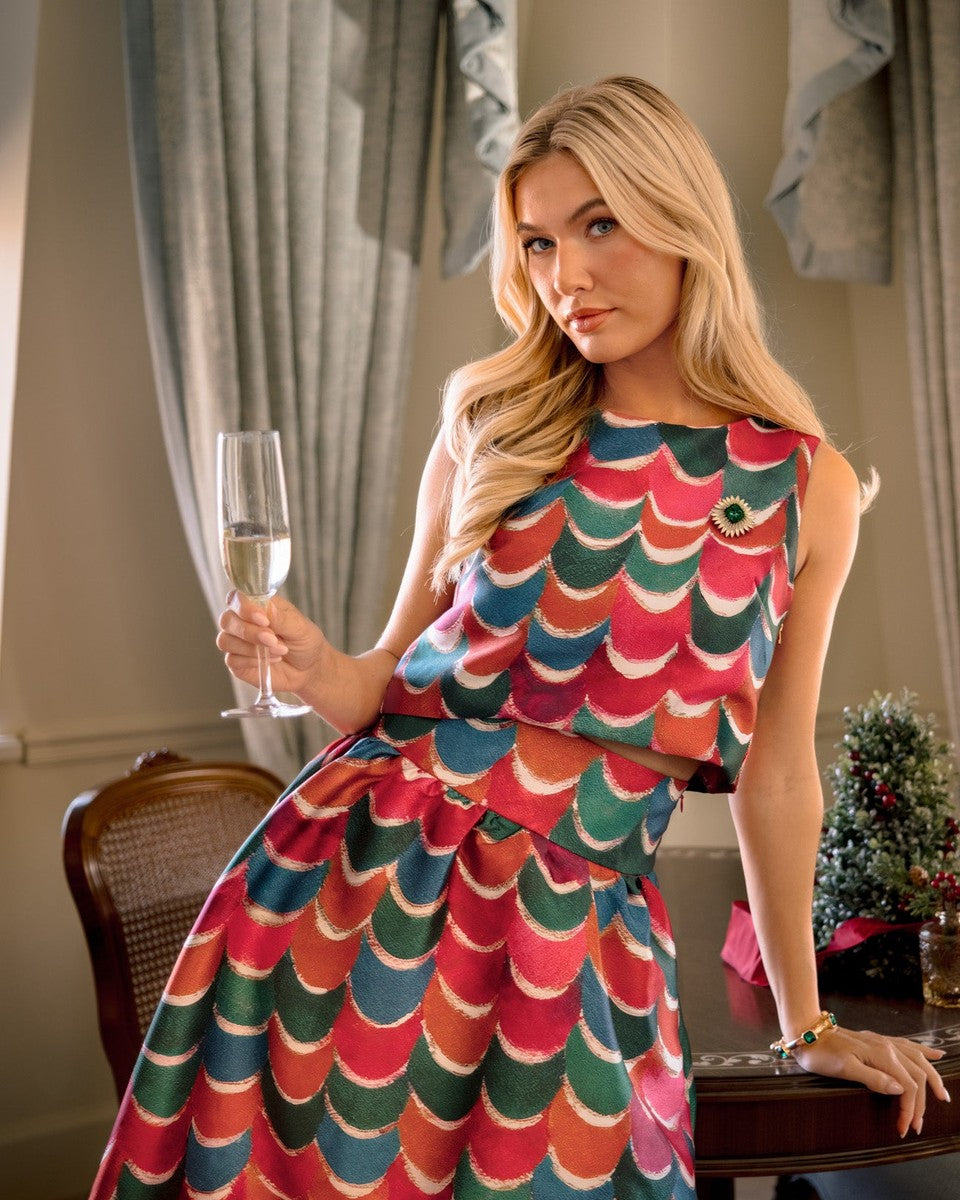
Beneath the invitations and a tangle of glass ornaments lay a velvet box holding the emerald brooch Eleanor had worn at every Christmas Eve Calista could remember. When she was eight, she had watched her mother fastening it and asked whether she would be beautiful when she grew up.
“Darling, I hope you’ll be interesting. Beautiful women are everywhere.”
Calista had spent the twenty years since attempting to be both.
She lifted the brooch out of its box. The clasp was difficult; Eleanor had always insisted there was a particular angle to it, though Calista suspected her mother simply disliked admitting that anything she owned required repair. She fastened it against her dress, checked that it would hold and went back to the trunk.


At the bottom was a leather guest book embossed with the family crest. Christmas Eve, 1959. Calista turned the pages, recognizing surnames she had known since the cradle, until she came to a signature she had no reason to expect.
Margaret Jewell Holt.
Margaret Jewell Holt Evans. Palm Beach’s reigning authority on breeding, propriety and the number of diamonds a woman could wear before lunch without being considered vulgar. The woman whose Beach Ball had been declared the event of the decade in the same column that called Calista’s party a rebellion, and who had not, to Calista’s certain knowledge, said a civil word to her since April.
A single black line had been drawn through the name. Calista found the implied editorial judgment entirely plausible.

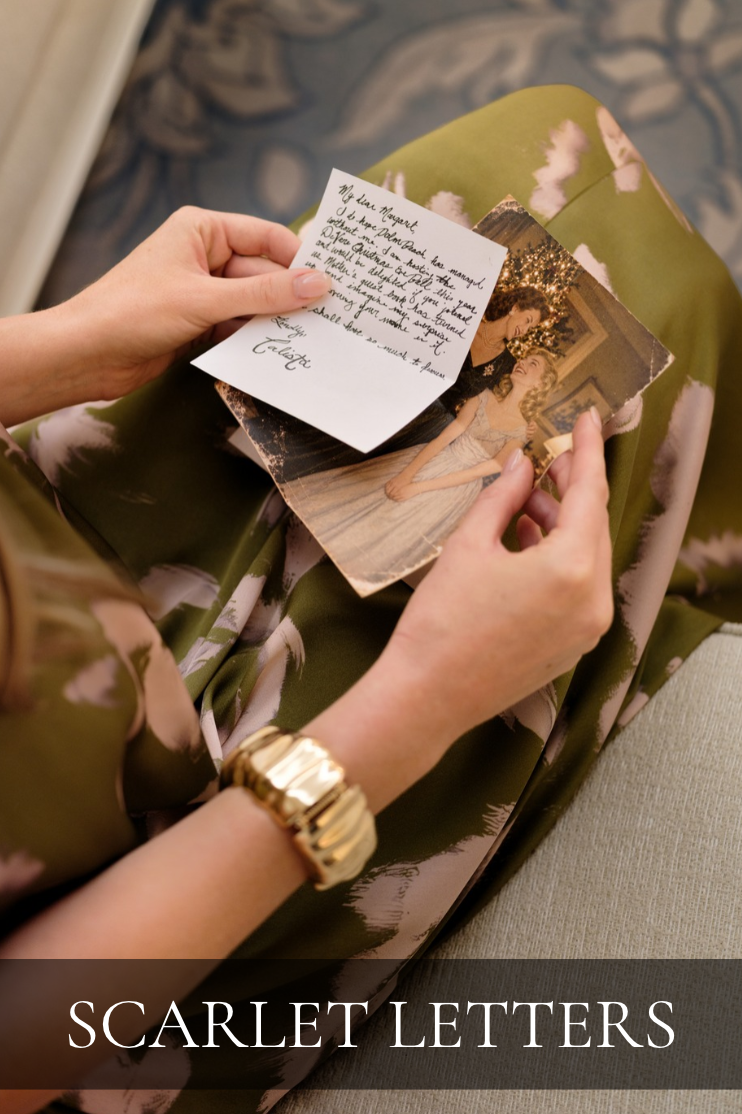
Tucked between the pages was a photograph. Eleanor stood beneath a Christmas tree beside a young woman in a dress that looked slightly too large for her. The photographer had caught them laughing. Eleanor’s hand rested on the girl’s shoulder, and the girl had leaned toward her as though she was about to say something else.
On the reverse Eleanor had written: Christmas, before everything changed.
Calista held it closer to the lamp. Her mother was forty in the photograph, younger than Calista remembered her looking even then. Margaret could scarcely have been twenty. They appeared to like each other very much.
Calista had been in Switzerland that Christmas, at a school her mother had chosen chiefly for its distance from eligible men, and she had stayed abroad, in one country or another, until 1963. Whatever had happened in Charleston in those years had happened without her. At the time, that had suited everyone.
She tried to remember Eleanor mentioning the Holts. There had been so many names at dinner, usually attached to opinions Calista had been told not to repeat. She had listened only when she thought something concerned her.
She rang for stationery and a martini. There were family matters to investigate, and she saw no reason to approach them inadequately fortified.
My dear Margaret,
I do hope Palm Beach has managed without me. I am hosting the DeVere Christmas Eve Ball this year and would be delighted if you joined us. Mother’s guest book has turned up, and imagine my surprise at discovering your name in it.
We shall have so much to discuss.
Fondly, Calista
She enclosed the photograph. After some consideration, she moved one of the forty-eight names to a list she had headed Regrettably, No Room and put Margaret at her own table.

Three days later, in Palm Beach, Margaret opened Calista’s envelope before luncheon, dressed in an olive-and-blush floral halter with a gold flower at the throat. She considered throwing the invitation into the fire. Then she saw the photograph and sat down.


When she telephoned Charleston, Judson answered. She did not bother with a greeting.
“Where, exactly, did she find that book?”
The Woman Who Wasn’t Invited
Margaret Jewell Holt Evans had always believed Christmas brought out the best in people. Unfortunately, she’d met most of them.
By the time she began packing for Charleston, she’d received fourteen invitations to holiday luncheons, three requests for charitable donations, and a handwritten note from a woman who had spent the previous six months pretending not to recognize her at the Palm Beach Country Club. She had declined them all. The charities, at least, had possessed the decency to be honest about wanting her money.
Calista Beauregard DeVere’s invitation was another matter entirely.
Margaret had read it six times, which was five more than she generally afforded anything written by Calista. The photograph enclosed with it had spent the better part of a fortnight locked in her dressing table, beneath a velvet jewelry case and several letters she’d been meaning to burn since 1962.
Her housekeeper, Mrs. Pritchard, observed that something was troubling her.
“Nothing is troubling me,” Margaret replied.
“Of course, ma’am.”
“I’ve simply decided to spend Christmas in Charleston.”
Mrs. Pritchard, who had been employed long enough to recognize a declaration of war when she heard one, asked how many trunks she should prepare.
“Four.”
“For Christmas, ma’am?”
“For Charleston.”
No further explanation was required.
Margaret arrived at The Charleston Place shortly before noon, wearing the expression of a woman attending a funeral at which she expected to be named in the will.
She had not set foot in Charleston since the autumn of 1962, and the familiar streets gave her very little pleasure. The city still asked who your people were before it asked your name. In Palm Beach, money could buy an introduction. In Charleston, it could buy the house, the furniture, and occasionally the family silver, but someone at the table would still remember that your grandfather had only been an insurance salesman.
Margaret had once found the distinction charming. She was nineteen then, and had been wrong about a great many things.
The porter had barely collected her luggage when she spotted Calista standing in the lobby.
She was wearing a pink tartan dress with puffed sleeves and a full skirt, its generous volume arranged around her with the confidence of a woman who believed other people should make room.
Margaret stopped. She looked down at her own dress.
Pink tartan.
The same pink tartan.
Hers was a longer, more restrained silhouette, with a fitted waist and a skirt that fell neatly below the knee. Calista’s appeared to have been designed under the assumption that the wearer might need to occupy several additional seats at dinner.
For a moment, Margaret considered returning to Palm Beach.
“Margaret!” Calista exclaimed, approaching with both arms extended. “You came!”
“Your invitation suggested it would be rude not to.”
“How unusual. That’s never stopped you before.”
Margaret stepped back from the embrace and examined Calista.
“You’re wearing my tartan.”
Calista followed her gaze.
“Darling, it’s plaid. You haven’t conquered Scotland.”
“I ordered this dress weeks ago.”
“Then I’m surprised you didn’t have time to choose something more flattering.”
Margaret’s smile tightened.
“And I see you’ve brought enough skirt for the entire family.”
“Well, someone has to make an entrance.”
“You’ve certainly made several.”
A woman passing by them paused to admire their outfits.
“How darling! Did you ladies plan to match?”
“Of course,” Calista replied.
“Absolutely not,” said Margaret.
The woman smiled uncertainly and continued toward the elevators.
Calista watched her leave.
“Well, that was awkward.”
“Was it?”
“Margaret, she looked terribly embarrassed.”
“She’ll recover.”
They walked toward the staircase together, two women who had spent the better part of a year cultivating distinct social identities and had somehow arrived at Christmas wearing the same fabric.
Charleston would never let them forget it.

Calista’s corner suite had undergone a remarkable transformation since her arrival.
There were flowers everywhere, stacks of engraved invitations on the writing desk, fabric swatches scattered across the sitting room, and an enormous arrangement of evergreen branches that had apparently required three hotel employees and a ladder.
Margaret examined the decorations.
“Good heavens. Are you hosting Christmas or invading Poland?”
“One never knows how these things will develop.”
Calista rang for tea, reconsidered, and ordered champagne.
Margaret removed her gloves and set her handbag on the only chair not occupied by flowers.
“I trust you don’t intend to spend the entire visit interrogating me about your mother’s belongings.”
“Certainly not.”
“Good.”
“I also intend to ask about the photograph.”
Margaret closed her eyes briefly.
“Calista.”
“And naturally, the guest book.”
“Of course.”
“And why Daddy became so peculiar when I mentioned your name.”
Margaret looked at her.
“You’ve spoken to Judson?”
“He’s my father, Margaret. We do occasionally communicate.”
“What did he say?”
“That I should leave the matter alone.”
“Sound advice.”
“Which is precisely why I ignored it.”
Calista smiled and reached for the champagne.
Margaret had known Judson DeVere for years. He was a decent man, if occasionally afflicted with the Southern male tendency to believe unpleasant matters would resolve themselves provided no one discussed them over dinner.
She had telephoned Judson after Calista sent her invitation, and he had explained that the guest book had been delivered with Eleanor’s Christmas decorations and that he had not examined its contents. He hoped the holiday might pass quietly.
Margaret had informed him that his daughter was organizing a Christmas ball.
He had sighed. It was a sound she remembered well.
It was evening before either woman said anything true.
They had changed for dinner, each privately relieved to have escaped the tartan. Margaret considered matching clothes a regrettable circumstance. Calista regarded them as a personal challenge.
Calista emerged from the adjoining room in a rose-colored, one-shouldered column dress, with a pale fur draped over her shoulders. The satin caught the lamplight as she crossed the room, and she paused long enough to adjust the fur in the mirror.
Margaret, already seated, looked up from her champagne.
“Are we expecting company?”
“No.”
“Then where are you going?”
“Nowhere.”
“I see.”
Calista turned.
“Is something wrong?”
“Not at all. I simply wondered whether you’d mistaken our dinner for an engagement announcement.”
“One can never be too prepared.”
“For an engagement?”
“For an audience.”
Margaret considered this and decided not to encourage her.
She was wearing a deep green two-piece ensemble covered in gold flowers that glimmered whenever she moved. The blouse’s long sleeves gave it an elegant formality, while the matching skirt fell softly around her legs. It was an extraordinary outfit, although Margaret had the particular talent of wearing extraordinary things as though they were entirely ordinary.


Calista studied her.
“Well. That’s rather lovely.”
“Thank you.”
“Is it new?”
“Yes.”
“How fortunate.”
Margaret raised an eyebrow.
“That you’ve finally found something to wear that isn’t plaid.”
“Calista, you were wearing the same plaid.”
“Yes, but I wore it first.”
“You were standing in the lobby when I arrived.”
“Exactly.”
Margaret reached for her glass. The champagne had already suffered considerably, much like her nerves.
Calista removed the fur and placed it over the back of a chair. She sat opposite Margaret, smoothed the satin over her knees, and reached for the leather guest book lying on the table.
The atmosphere changed.
Margaret watched her open it.
“I thought we might begin here,” Calista said.
“I rather suspected we would.”
“Mother’s Christmas Eve Ball. Nineteen fifty-nine.”
Margaret looked at the page.
There it was. Her name, written in the careful hand of a nineteen-year-old girl, with a single black line drawn deliberately through it.
“Your mother and I were friends,” Margaret said.
Calista blinked.
“Friends?”
“Very good friends.”
“With each other?”
“No, Calista. With the same imaginary person.”
Calista leaned back.
“Well. This is already far more interesting than I anticipated.”

In December of 1959, Margaret Jewell Holt had arrived in Charleston with two suitcases, seventy-three dollars, and an engagement ring she no longer possessed.
Her engagement to Charles Whitcomb had ended publicly, which Margaret considered entirely appropriate given the enthusiasm with which Charles had conducted his private affairs.
Charles was the eldest son of a family with substantial Savannah property, impeccable manners, and an alarming number of opinions about how his future wife ought to behave.
He had also been sleeping with a young woman whose principal qualifications included winning a local beauty contest and possessing a father willing to overlook certain irregularities in the Whitcomb family finances.
Charles informed Margaret that the situation was complicated.
Margaret informed Charles that it was about to become considerably less so.
She returned his ring at dinner, in front of both families, between the soup and the fish.
Her mother fainted. Charles’s father threatened legal action. Margaret ordered dessert.
By the following morning, everyone in Savannah knew the engagement had ended. By luncheon, Charleston had heard about it. By dinner, several details had been added that Margaret found both anatomically improbable and unnecessarily imaginative.
Her own family minded far less about Charles’s behavior than about her insistence on making it public.
Her father suggested that a sensible woman would have handled the matter privately.
Margaret suggested that a sensible man would have raised a better son.
The Holts expressed their displeasure the way banking families generally did. They closed the account.
And so, Margaret found herself in Charleston, staying with a distant aunt whose hospitality was conditional and whose principal contribution to the situation was suggesting that Margaret apologize.
“For what?” Calista interrupted.
Margaret looked at her.
“Precisely.”
Calista took a sip of champagne.
“Go on.”
It was at a Christmas luncheon on Meeting Street that Margaret met Eleanor Beauregard DeVere.
Margaret had overheard two women discussing her failed engagement over their she-crab soup. One suggested she had been fortunate to escape the marriage. The other replied that Charles had been even more fortunate.
Margaret had managed to remain composed until someone asked whether she’d heard from him recently.
She excused herself and retreated to the ladies’ room.
Eleanor found her there, standing before the mirror, attempting unsuccessfully to repair her mascara with a handkerchief that had already surrendered.
“Good Lord. Has someone died?”
Margaret turned.
“No.”
“Well, that’s a relief. I was afraid I’d missed something interesting.”
Margaret laughed despite herself, which did her mascara absolutely no favors.
Eleanor handed her a clean handkerchief and waited while she used it.
“I’m Eleanor Beauregard.”
“I know who you are.”
“How unfortunate. I was hoping to make a better first impression.”
They stood together in the ladies’ room for nearly twenty minutes.
Eleanor asked very few questions about Charles and a great many more about Margaret herself. Where she’d gone to school. Whether she enjoyed Charleston. What she intended to do now.
Margaret admitted that she hadn’t the faintest idea.
Eleanor considered this.
“Well, that’s rather exciting.”
“Is it?”
“Of course. Most of the women in that dining room have known precisely what they’re going to do for the past twenty years. They’re dreadfully disappointed with the results.”
Margaret laughed again.
When they returned to the dining room, Eleanor took Margaret directly to her own table. A chair was brought over, two women were obliged to move, and Margaret was asked whether she would be spending Christmas in Charleston.
Before Margaret could answer, Eleanor invited her to the DeVere Christmas Eve Ball.
There was only one difficulty. Eleanor’s mother.
“My grandmother?” Calista asked.
“Your grandmother.”
“Oh, dear.”
Eleanor’s mother had been a woman of extraordinary social conviction. She believed in good manners, proper introductions, excellent breeding, and the importance of knowing precisely how much money everyone possessed without ever being vulgar enough to ask.
She also possessed a remarkable ability to turn hospitality into a form of punishment.
When Eleanor announced that Margaret would be attending the Christmas ball, her mother objected. The Holt family scandal had already been discussed. Margaret’s engagement had ended disgracefully. She was no longer considered suitable company.
Eleanor invited her anyway.
On Christmas Eve, Margaret arrived at the DeVere house wearing a borrowed evening dress and shoes that pinched terribly.
She had expected to be uncomfortable. She had not expected to be humiliated before the first course.
As guests began signing the family guest book, Eleanor’s mother approached Margaret. She watched her write her name.
Then, without saying a word, she took the pen and drew a black line directly through it.
Margaret remembered staring at the page.
“I beg your pardon?”
The older woman closed the book.
“There must be some misunderstanding, Miss Holt. Your presence this evening is a courtesy extended by my daughter. I would hate for anyone to mistake it for a change in your circumstances.”
Margaret stood perfectly still. She had never felt poorer in her life.
Calista looked down at the guest book. The name was still visible beneath the line.
“So that’s why she crossed it out.”
“Yes.”
“How appalling.”
Margaret nodded.
“And Mother?”
“Your mother came across the room, took my arm, and informed everyone that I was sitting beside her at dinner.”
Calista smiled faintly.
“That sounds like Mother.”
“She was furious.”
“Did she say anything to Grandmother?”
“Not where the guests could hear.”
“How disappointing.”
“Your mother understood that a public argument would give everyone exactly what they wanted.”
Calista considered this.
“Personally, I think I would have made a scene.”
“Yes, darling. That’s one of your more dependable qualities.”
The corner of Calista’s mouth lifted.
“Grandmother really was a dreadful snob.”
“She once refused to speak to a woman because she served mayonnaise from a jar.”
“She had standards.”
“She had a personality disorder.”
“Margaret!”
“Oh, don’t look so shocked. You inherited most of it.”
Calista laughed.
Then she looked again at the photograph.
“Did you enjoy yourself that evening?”
Margaret’s expression softened.
“More than you can imagine.”

Margaret remembered the music and the candles. She remembered Eleanor asking her to stay after the other guests had gone.
Someone brought sandwiches because neither woman had eaten much at dinner, and Eleanor kicked off her shoes beneath the table.
They sat together until nearly two in the morning.
Margaret had spent weeks waiting for someone to tell her what she’d done wrong, and for the first time she was in the company of someone who didn’t seem particularly interested in discussing it.
Eleanor asked her to come back on Friday.
Margaret did. She came back the following week, too, and many times after that.
She kept Eleanor’s handkerchief for years.
“It was the first time since leaving Savannah that I didn’t feel like an embarrassment,” Margaret said.
Calista watched her.
She had known Margaret for months. She’d seen her preside over charity committees, reduce grown women to tears with a single observation, and turn the arrangement of a dinner table into something approaching military strategy.
She had never imagined her frightened. Or poor. Or nineteen.
For a moment, Calista was tempted to reach across the table. She did not.
Instead, she looked down at the photograph.
“Mother never told me any of this.”
“Why would she?”
“Because you’re Margaret Jewell Holt Evans.”
“I was Margaret Jewell Holt long before I became anyone’s wife.”
“Yes, but you know what I mean.”
Margaret did.
And she understood, perhaps better than Calista herself, that discovering one’s parents had existed as independent people before having children was one of adulthood’s more irritating revelations.
“Your mother was a remarkable woman,” she said.
“I know.”
“You knew her as your mother.”
Calista looked up.
“There’s a difference.”
Outside the windows, Charleston was settling into evening. Somewhere below, guests were arriving for dinner, and the lobby was filling with the sound of Christmas music.
Calista reached for her glass.
“Why did you stop coming to the house?”
Margaret looked down at the photograph.
“Your mother asked me to.”
“Why?”
“We disagreed about the scholarship.”
“Mother disagreed with people constantly. She usually invited them back so she could continue.”
“I told her something she couldn’t forgive.”
“What?”
Margaret met her eyes.
“That she’d been wrong.”
Calista felt something unpleasant settle in her stomach.
For most of her life she’d considered herself an excellent judge of character, particularly when the character belonged to someone else. Now she was beginning to realize that the two women she thought she understood best had known one another for years, and neither had seen fit to tell her.
“You could have told me you knew her.”
“Yes,” Margaret said. “I could have.”
Calista waited for the rest. Margaret gave her none.
There was a knock at the door.
A bellman stood in the corridor with a small silver tray. On it lay an envelope and a card in her father’s hand.
You would keep asking. I found this among your mother’s scholarship papers. It has your name on it, so I have not opened it.
The paper had yellowed with age.
Calista recognized the handwriting before she picked it up.
Eleanor.
Her name was written across the front in the familiar careful script.
For a moment, Calista forgot what she’d been about to say.
Across the table, Margaret had gone very still.
“Why didn’t she give it to me herself?”
“Because there were things that she found difficult to say.”
“About you?”
“Among other things.”
Calista turned the envelope over. It was sealed.
For the first time that evening, the room seemed entirely too quiet.
Margaret rose to leave.
“Don’t spend all night trying to decide what she meant before you’ve read it.”
“That’s an outrageous accusation.”
“It’s an accurate one.”
Margaret retrieved her handbag and gloves.
At the doorway, Calista spoke.
“Margaret?”
She turned.
“Did you love my mother?”
Margaret’s expression changed. There was no clever answer this time.
“Very much,” she said.
Then she left.

Calista remained in the doorway long after Margaret had gone.
The champagne was finished, the flowers had begun to droop, and the guest book lay open on the table. Her pale fur had slipped from the back of the chair onto the floor. Ordinarily, this would have required immediate attention. Calista scarcely noticed. She crossed to the writing desk and sat down with Eleanor’s envelope in her hands.
There was something almost irritating about the ordinary shape of her name on it. Her mother had written it on school labels and birthday cards, on envelopes containing spending money, and on little notes left beside her breakfast plate after they’d quarreled.
Calista had forgotten what it felt like to receive something new from her.
She found the paper knife beneath a stack of invitations and opened the envelope carefully, without tearing the paper.
Inside were two sheets.
She unfolded the first.
My darling girl,
You were abroad when Margaret Holt used to come to the house. By the time you returned, I had stopped mentioning her.
We quarreled over a young woman who applied for the scholarship. Margaret believed she deserved it.
Calista stopped.
Then she read the next line.
I agreed with her until my mother asked me to vote.
She stared at the words.
Outside, the Christmas lights glowed over Charleston.
Somewhere down the hall, a door closed.
Calista turned back to the letter and read the sentence again. Then she read the one after it.
When Margaret reminded me afterward, I asked her to leave.
For once, she could think of absolutely nothing to say.