



Every shoe we carry: boots, heels, flats, loafers, sneakers and sandals.
Women's Shoes
Shop women's shoes including boots, heels, flats, loafers, sneakers, sandals and mules for work, weekends, weddings, travel and everyday wear. Start with where you are going and how much time you expect to spend on your feet, then narrow the choices by heel height, toe shape, material and fit.
What type of shoe should I choose?
Start with what the outfit and the day require.
Boots give you ankle and knee-high options for denim, dresses and skirts. Heels range from lower kitten heels to taller block heels and stilettos for work and events.
Flats keep the heel low while offering shapes such as ballet flats and Mary Janes. Loafers add more structure through the upper and work naturally with trousers, denim and skirts.
For casual days, Sneakers offer another option. Sandals and Mules & Slides give you more open constructions when the weather or outfit calls for them.
How do I choose the right heel height?
Use a pair you already own as a reference.
Compare its heel measurement with the shoe you are considering rather than estimating height from a photograph. A small change in heel height can feel noticeable once you are standing or walking in the shoe.
Heel shape matters separately. A block heel has a wider base than a stiletto, while a kitten heel keeps the height lower. A platform can add overall height while changing the relationship between the heel and the front of the shoe.
Choose based on what you are comfortable wearing and what the day requires.
Which shoes work for the office?
Loafers, flats, pumps and lower heels can all work in an office depending on the dress code.
A loafer gives trousers or a midi skirt a more structured finish. Flats keep the profile low, while a pointed-toe pump or kitten heel can move the outfit in a dressier direction.
If you spend much of your workday walking or standing, factor that into the heel and construction you choose. The shoe still needs to work after the meeting is over.
What shoes should I wear to a wedding or event?
Start with the venue.
For an indoor wedding, pumps, slingbacks, ankle-strap heels and other dress shoes can all work depending on the outfit.
For grass or another soft outdoor surface, look carefully at the heel base before choosing a narrow stiletto. A wider block heel provides more surface area beneath the heel.
Metallics, black and neutral shades pair easily with many occasion dresses, but color is not the only consideration. The shoe should also suit the formality of the event and the amount of standing or walking you expect to do.
Browse Heels when you want the event selection narrowed first.
What is the difference between flats, loafers and mules?
Flats describe shoes with little or no heel and can include several different constructions.
Loafers have a closed upper with a more structured slip-on shape. They may include details such as hardware, tassels or a thicker sole.
Mules are open at the back, so the foot slides into the shoe without a heel counter. They can be flat or heeled.
The categories overlap in heel height but differ in how the shoe is constructed and held on the foot.
How should shoes fit?
Start with the length, but pay attention to width and toe shape too.
Your heel should sit where the shoe is designed to hold it, and your toes should have enough room for the shape of the toe box. A pointed toe distributes space differently from a round or square toe even when both shoes are labeled the same size.
Straps should hold the shoe securely without digging into the foot or ankle. With slingbacks, check how the back strap sits on the heel. With ankle straps, make sure the buckle can be adjusted comfortably.
Use the individual product's fit notes because sizing can vary between brands and shoe constructions.
What should I look for in boots?
Start with the shaft height.
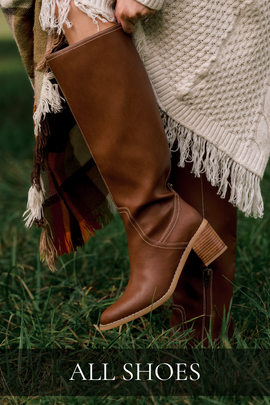
Ankle boots stop near the ankle and work easily with denim, trousers and different dress lengths. Knee-high boots extend farther up the leg and make the shaft itself a larger part of the outfit.
For taller boots, check the shaft and calf measurements when they are provided. Foot size alone does not tell you how the upper part of the boot will fit.
Also look at heel height, toe shape and material. A flat riding-style boot, pointed stiletto boot and block-heel ankle boot solve different needs even when they are all in the same category.
Browse Boots when you want to compare them directly.
Which shoes work well for travel?
Choose around the amount of walking and the activities on the trip.
Sneakers and flats are useful when you expect to spend much of the day on foot. A loafer can give you another closed-toe option that works with both pants and dresses.
For warm-weather trips, sandals or slides take up less room than many closed shoes and work with a range of casual outfits.
If you are packing a dressier shoe too, choose one that works with several outfits rather than bringing a different pair for every dinner.
What should I check before ordering shoes online?
Read the individual fit notes first.
Check whether the shoe is reported to run true to size, small or large, and whether there is information about width. Then review heel height, platform height, shaft measurements and strap adjustability when those features apply.
Look at the material as well. Faux leather, suede, fabric, mesh and woven constructions can feel and behave differently even when the shoes share the same shape.
If you are between sizes or have a specific fit concern, use the product information for that shoe rather than assuming every style from the collection fits the same way.