




Sweaters & Cardigans for Women
Shop sweaters and cardigans for women in cable knits, Fair Isle, argyle, stripes, solids and embroidered styles. Find crewnecks, V-necks, turtlenecks, cropped sweaters and button-front cardigans in lighter knits for layering and heavier styles for colder weather.
What is the difference between a sweater and a cardigan?
A sweater is usually pulled on over the head and worn as the main knit layer. Crewnecks, V-necks, mock necks and turtlenecks all fall into that category.
A cardigan opens at the front, usually with buttons or another fastening, which makes it easier to add or remove during the day. Some cardigans are light enough to wear like a top when buttoned, while heavier styles work better as an outer layer.
Browse Cardigans when you specifically want an open-front or button-front layer.
How do I choose the right sweater shape?
Start with where you want the sweater to end and what you plan to wear underneath it.
A cropped sweater ends closer to the waist and works naturally with higher-rise jeans, trousers and skirts. A longer sweater gives you more coverage through the torso and can sit differently over slim or wide-leg bottoms.
A fitted knit follows the body more closely and is easier to tuck or layer under a jacket. A relaxed or oversized sweater gives you more room through the body and sleeves.
Check the garment measurements rather than relying only on words such as “cropped,” “relaxed” or “oversized,” because those proportions vary by style and brand.
What is the difference between a crewneck, V-neck, mock neck and turtleneck?
A crewneck sits close to the base of the neck with a rounded opening.
A V-neck opens lower through the center front, creating more space at the neckline.
A mock neck rises higher than a crewneck but does not fold over. A turtleneck extends farther up the neck and may fold or roll depending on the construction.
Browse Turtlenecks & Mock Necks when a higher neckline is what you are looking for.
What do cable knit, Fair Isle and argyle mean?
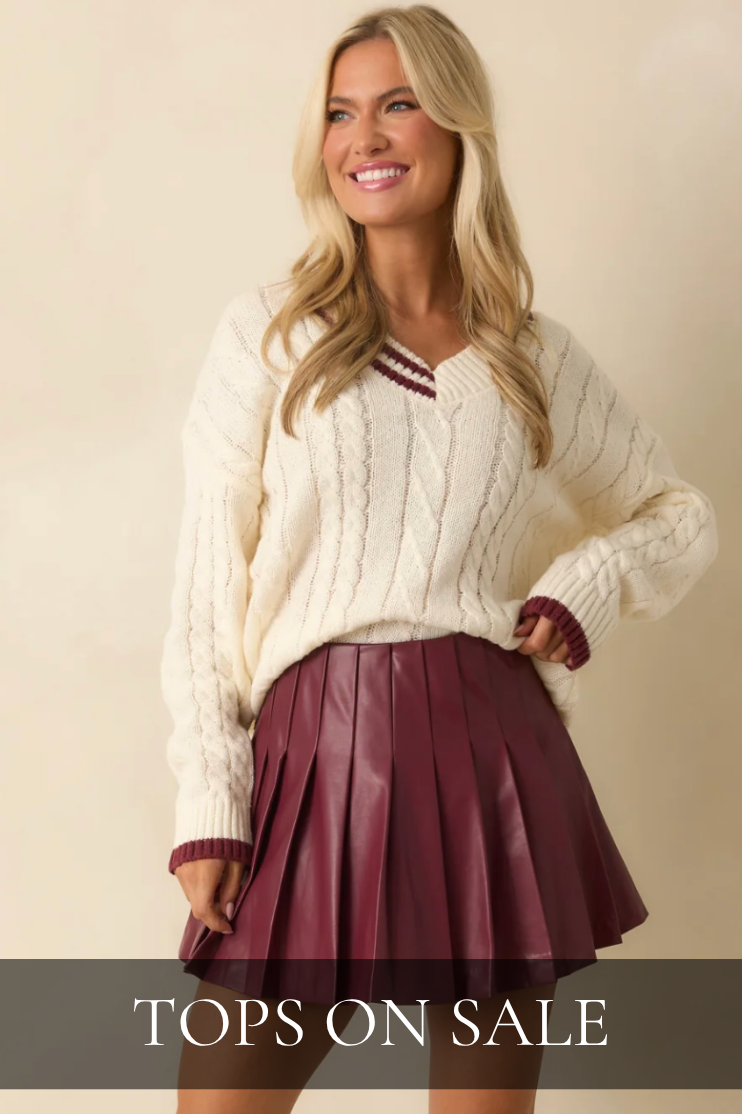
Cable knit describes a raised, twisted stitch pattern that creates texture in the sweater. The cables may cover the entire garment or appear only on certain sections.
Fair Isle uses rows of repeated color motifs worked into the knit, often with several colors appearing across the same sweater.
Argyle uses a repeating diamond pattern, usually with contrasting lines or colors running through it.
These terms describe the knit or pattern, not the weight of the sweater. A cable knit can be lightweight or substantial, so check the fabric composition and product details when warmth matters.
Which sweaters work well for layering?
Think about both the sweater and what needs to fit underneath it.
A crewneck with enough room through the shoulders can sit over a collared shirt or fitted tee. A cardigan is useful when you want a layer that can come off without pulling it over your head.
Finer knits are generally easier to wear under jackets because they create less bulk through the sleeves and shoulders. Heavier cable knits and oversized sweaters may work better as the outer knit layer.
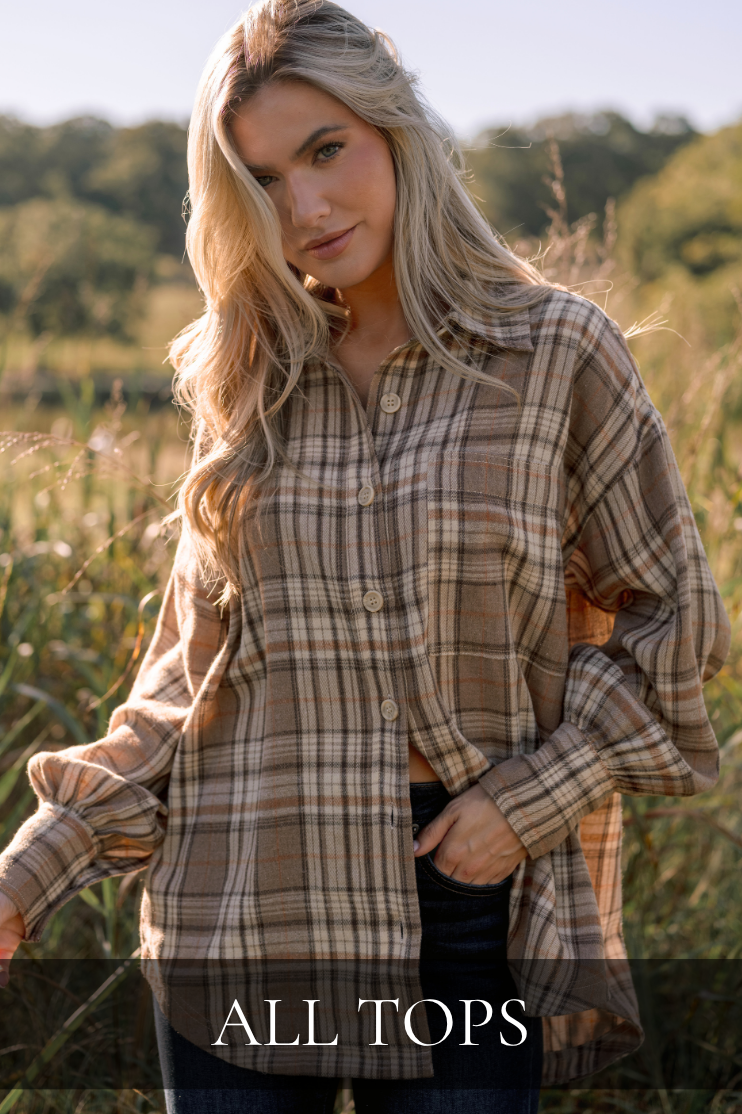
For a broader selection of blouses, tees and tanks to wear underneath, browse All Tops.
Which sweaters work for the office?
A fine-gauge crewneck, mock neck, fitted knit or simple cardigan can work easily with trousers or a skirt when the style suits your workplace.
A collared shirt under a crewneck creates a more layered, tailored look. A cardigan over a sleeveless blouse gives you another option when office temperatures change throughout the day.
More decorative knits can work too. Embroidery, stripes or argyle do not make a sweater inappropriate for work on their own; consider the overall silhouette and your workplace dress code.
What is the difference between a sweater and a sweater dress?
A sweater is a top designed to be worn with a separate bottom.
A sweater dress uses knit construction in a one-piece silhouette and may come in mini, midi or maxi lengths.
Browse Sweater Dresses when you want the knit to be the entire outfit rather than one layer of it.
How warm will a sweater be?
Sleeve length alone does not tell you how warm a sweater will feel.
Fiber content, knit density, thickness and how open or tight the stitches are all matter. An open-knit long-sleeve sweater may provide less warmth than a dense short-sleeve knit.
Check the fabric composition and look closely at the knit structure. If the stitches are open enough to see through, plan for a layer underneath when the weather requires it.
How should I care for a sweater?
Follow the care instructions on the individual garment.
Different fibers and knit constructions can require very different treatment, so do not assume every sweater can be washed or dried the same way.
When storing a heavier knit, folding can help prevent the weight of the garment from pulling at the shoulders. For lighter pieces, follow the care and storage guidance that best suits the fabric and construction.
Be careful around jewelry, hooks or rough surfaces that can catch an open or textured knit.
What should I check before ordering a sweater?
Review the bust, length and sleeve measurements along with the intended fit.
For cropped sweaters, check where the hem is likely to fall in relation to the rise of the pants or skirt you plan to wear. With oversized styles, compare the garment measurements rather than automatically sizing down.
Look at the fabric composition for stretch, and check whether the knit is dense, open or sheer enough to require another layer.
If the sweater is part of a set, confirm whether the coordinating piece is included or sold separately.